When “Net Zero” is no longer a slogan – but the resilience of a new-era business
When sunlight becomes a strategy
Vietnam is one of the countries blessed with abundant solar radiation. But for many years, sunlight was just weather. Today, it has become an asset.
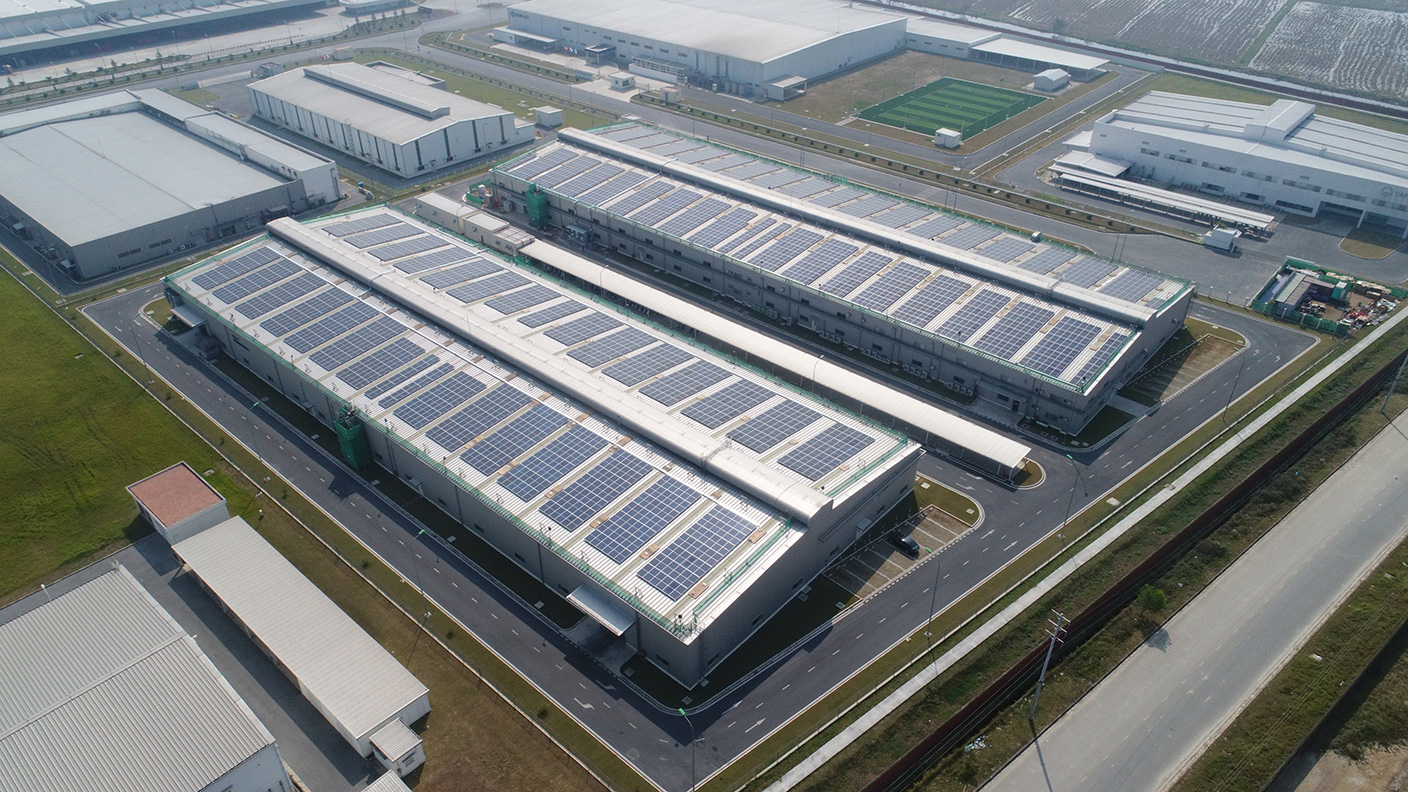
On the rooftops of factories in Binh Duong, Dong Nai, and Bac Ninh, solar panels quietly absorb sunlight—without the noise of thermal power plants or industrial boilers—but they are silently creating something more valuable than electricity: long-term competitive advantage.
As Vietnam commits to achieving net-zero emissions by 2050, and global corporations tighten ESG standards, solar power is no longer a “green trend.” It is a survival requirement.
The question is no longer “should we invest or not?”, but:
Will your business start early or be forced to catch up when it is too late?
B2. Vietnam market context: major opportunity in a restructuring phase
Vietnam witnessed a solar boom between 2019–2021 thanks to attractive FIT pricing policies. Tens of gigawatts were installed in just a few years.
Provinces like Ninh Thuan and Binh Thuan became solar hubs with massive projects covering vast areas of land.
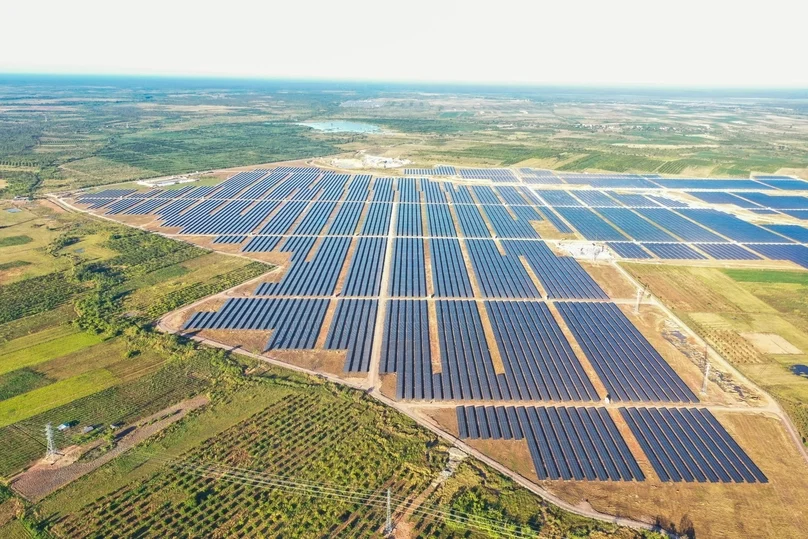
Xuan Thien Solar Energy System.
After the incentive period, the market entered a policy adjustment phase. Feed-in tariffs changed, and net-metering expectations were reduced. This made many investors cautious.
But for manufacturing businesses with high daytime electricity consumption, this is actually a golden timing.
Why?
Because the focus is no longer on selling electricity.
It is about self-consumption for cost reduction and immediate emission reduction.
Investment cost structure: what lies behind the numbers?
1. Equipment (largest cost share)
- Solar PV modules (mono PERC, TOPCon…)
- Inverters
- Mounting structures, cables, protection systems
Global solar panel prices have significantly decreased compared to peak periods, while efficiency and lifespan have improved to over 25 years.
2. Installation & construction
- Roof reinforcement
- Waterproofing
- Grid connection
- Permits & technical documentation
3. Operation & maintenance (O&M)
Typically low annual cost—mainly cleaning and inverter replacement after 10–15 years.
Payback analysis: numbers that matter
A factory consuming 1 million kWh/month with a 1 MWp system can generate around 1.3–1.5 million kWh/year.
If:
- 70% is self-consumed
- Electricity price is 0.08–0.10 USD/kWh equivalent
The annual savings are significant.
Payback period: typically 4–7 years.
System lifespan: over 25 years.
That means: after payback, the business enjoys ~20 years of near-free electricity.
Net Zero: pressure or strategic opportunity?
Companies like Apple, Unilever, and Nike require suppliers to demonstrate emission reduction roadmaps.
To remain in global supply chains, reducing Scope 2 emissions (electricity-related emissions) is essential.
Solar power is the fastest and most measurable solution.
“We don’t just manufacture. We take responsibility.”
Flexible financial models
- ESCO model: third-party investment, businesses buy cheaper electricity
- Solar leasing: no upfront CAPEX required
- PPA model: long-term renewable electricity purchase agreement
This transforms solar power from a capital expense into a cash flow optimization tool.
Risks and management
- Policy changes
- Grid congestion
- Low feed-in tariffs for excess electricity
However, the biggest risk is not policy.
It is not acting while competitors already have.
The future belongs to whom?
Two competing companies:
- One fully dependent on grid electricity and exposed to price fluctuations
- One self-generating 40–60% of electricity with green financing advantages
After 10 years, the difference is not just electricity cost.
It is market position.
Sunlight has never been more valuable
Vietnam has natural advantages, mature technology, proven market experience, and growing green finance availability.
The remaining factor is business leadership decision.
Net Zero is not a slogan in an annual report.
It is a sustainable growth strategy.
And solar energy—simple, silent, persistent—can be the first step.